Feeling overwhelmed by the chaos in your kitchen? Trust me, you’re not alone. I’ve been there, drowning in clutter, wasting time searching for that hard to find spatula.
It’s madness. But you can find order in the chaos (without losing your mind). What if I told you that with a few kitchen organization tips, you could turn that mess into a functional, stress-free zone?
I get it. Organizing feels like a chore. But think about the satisfaction of knowing exactly where everything is.
Imagine cooking without the frantic search for a misplaced measuring cup. Sounds dreamy, right? You deserve a kitchen that works for you, not against you.
This article will arm you with practical strategies to transform your space. No fluff. Just tried-and-tested advice from those who’ve conquered their clutter.
Dive in, and you’ll learn fast, real-world tips to simplify your kitchen. Because when your kitchen is in order, everything else just seems easier.
Think Like a Chef: Set Up Your Kitchen in ‘Zones’
Ever heard of “mise en place”? It’s a fancy French term for “everything in its place.” Chefs swear by it because, let’s face it, chaos in the kitchen leads to burnt dinners. Why not apply “mise en place” to your entire kitchen layout?
It’s one of the smartest kitchen organization tips I’ve ever adopted, and it goes way beyond the usual ingredient shuffle.
The Prep Zone
This is your main counter space. Picture a mini haven of order where cutting boards, knives, mixing bowls, and your go-to oils and spices live. Keep it clear.
Nothing clutters the flow like trying to chop veggies in a mess. For more fast slicing and dicing, dive into knife skills cutting techniques efficiency.
The Cooking Zone
This is the hot spot. Literally. It’s all about the stove and oven area.
You need pots, pans, spatulas, tongs, and pot holders all within arm’s reach. Ever tried grabbing a pot holder across the kitchen with a hot pan in hand? Not fun.
Trust me.
The Cleaning Zone
Here, it’s all about the sink and dishwasher. This zone demands soaps, sponges, trash, compost, and the dish rack. That’s it.
Keep anything else out of here. It’s your cleanup control center.
The Storage Zone
Think pantry, fridge, and cabinets. This is where backstock, lesser-used appliances, and bulk items hang out. Why separate it from the action?
Because digging through a pile of crockpots when you’re searching for cereal is a waste of time. Keep the chaos contained, folks.
Declutter with Purpose: The ‘Do I Actually Use This?’ Test
Let’s cut to the chase. When it comes to kitchen organization, forget the whole “sparking joy” thing. We’re aiming for functionality.
Does it make sense to keep a gadget that’s gathering dust? If you haven’t used it in the last 6-12 months (and no, turkey basters don’t count), it’s time to reassess.
Those unitaskers are the worst offenders. Avocado slicers, garlic presses, strawberry hullers. Ditch them.
A good knife can handle all that. Trust me, you’ll save space and money. I mean, do you really need a tool that does just one thing?
Then there’s the issue of duplicates. Why have ten mismatched mugs when four that stack nicely will do the job? Same goes for food storage containers.
It’s not just about space; it’s about sanity. Plus, who wants to spend extra time hunting for a lid that fits?
Here’s a pro tip: create a “purgatory box.” Toss in anything you’re unsure about. If you don’t miss it after a month, donate the whole box. Yes, without peeking inside.
This method clears clutter and frees your mind.
For more kitchen organization tips, you might want to check out some expert advice. Because honestly, a clutter-free kitchen makes cooking a lot more enjoyable. And isn’t that the point?
Having a streamlined space means more time to experiment with flavors and less time battling chaos. That’s a win in my book.
Smart Storage: Cooking Without the Clutter
Cooking isn’t just a task; it’s an art. But who can create art in chaos? Let’s talk pots and pans.
They’re not meant to be stacked like a game of Jenga. You need vertical storage. Use tension rods or simple drawer dividers.
A pegboard system works wonders too. Every pan, within reach. Easy to grab.
Isn’t that what we all want?
Now, spices. Have you ever dug through a messy drawer looking for cumin? It’s inefficient.
A tiered rack isn’t much better. Shallow drawers with labels on lid tops. Or even better, a wall-mounted magnetic rack.
Organize by frequency. Use them often? Put them in front.
Cook Mexican? Group your cumin and chili powder.
Dry goods next. Flour, pasta, grains. If they’re in bags, you’re doing it wrong.
Decant into clear, airtight containers. They’re stackable. They keep food fresh, prevent pests.
Best part, you see your inventory at a glance. No more shaking bags to guess. Trust me.
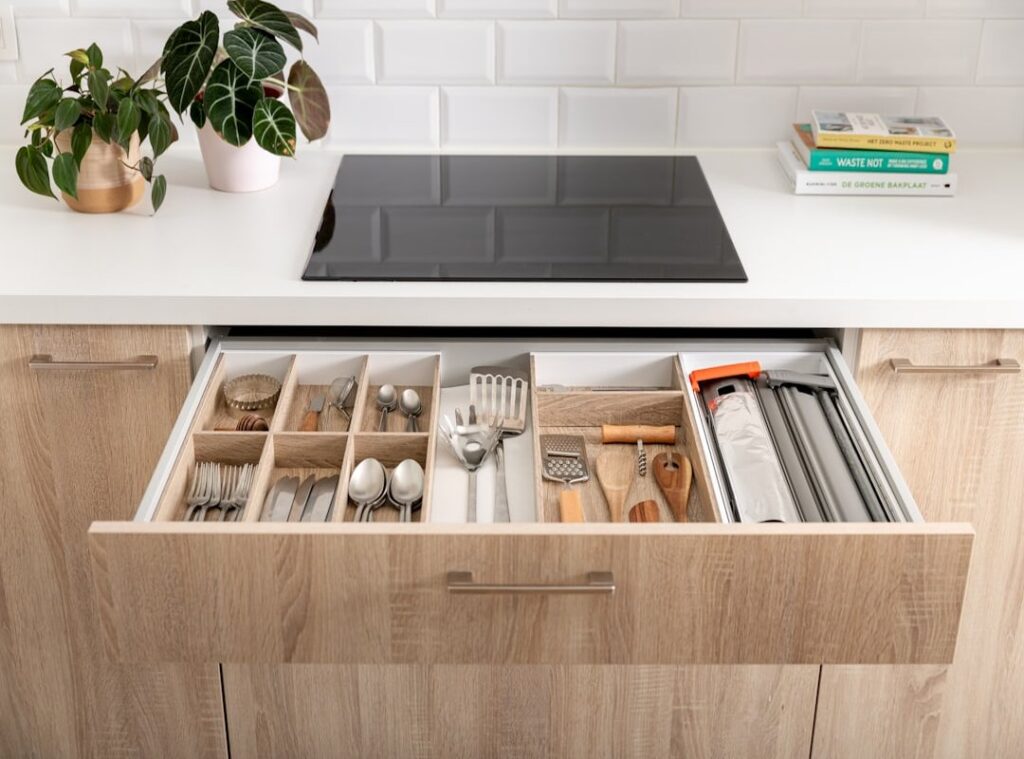
Utensils? Divide and conquer. Everyday silverware doesn’t mix with cooking utensils.
Drawer dividers for forks and spoons. A crock near the stove for cooking tools. No more hunting for that whisk.
And, please, get rid of duplicates. Do you really need three spatulas?
These kitchen organization tips won’t just tidy up. They’ll change how you cook. Faster.
More fast. Kind of like how a pro chef preps ingredients. Speaking of which, you can check out how to get that chef-ready feel in your own home Prepping Ingredients Like Pro Chef.
How many times have you struggled to find something while cooking? It throws off your mojo. With these simple adjustments, your kitchen becomes a well-oiled machine. (Pun intended.) Now, don’t you feel like cooking is more inviting?
Less hassle, more joy. That’s how cooking should be.
The 5-Minute Daily Reset: Keep Your Kitchen in Check
Let’s get real. Kitchen organization isn’t a one-and-done deal. It’s more like brushing your teeth.
Something you do every day without thinking. You want a tidy, stress-free kitchen? Make it a habit.
That’s why I swear by the 5-minute daily reset.
Every evening, treat your kitchen to a mini closing ceremony. It’s simple, it’s quick, and it works. Here’s what I do:
- Clear and wipe down all counters.
- Load and run the dishwasher (or wash and dry the dishes).
3.
Return all ingredients and tools to their designated zones.
- Take out the trash and recycling if they’re full.
Easy, right? Five minutes, tops. This small ritual isn’t just about aesthetics.
There’s a psychological payoff too. You wake up to a clean kitchen, ready to use. It reduces stress and boosts your chances of actually cooking at home.
Who wants to start their day with a mess? Not me.
This isn’t about perfection. It’s about consistency. A little bit every day keeps the chaos at bay.
Skip a day here and there, and it’s no biggie. But make it a routine, and you’ll see the difference in your stress levels.
Pro tip: put on a killer playlist. It makes those five minutes fly by.
Want more kitchen organization tips? Keep it simple. Keep it daily.
Your future self will thank you when you’re not sorting through a mountain of clutter. Make it a habit, and soon you won’t even think about it.
Cooking Starts with a Smart Kitchen
A cluttered kitchen can make cooking feel like a tiresome task, right? But here’s the fix: adopt a pro-chef-inspired system. This simple approach turns chaos into order by focusing on zones and being ruthless with what stays.
It saves time, lowers stress, and makes you a sharper cook.
Want to try it? Don’t overwhelm yourself. Start small.
Pick one area. Maybe around your stove (and) give it 15 minutes tonight. This small step in kitchen organization tips can transform your cooking experience.
Why wait? Dive in and see the change. You’ll wonder why you didn’t start sooner.

 Jexor Zolmuth writes the kind of modern food trends and insights content that people actually send to each other. Not because it's flashy or controversial, but because it's the sort of thing where you read it and immediately think of three people who need to see it. Jexor has a talent for identifying the questions that a lot of people have but haven't quite figured out how to articulate yet — and then answering them properly.
They covers a lot of ground: Modern Food Trends and Insights, Hidden Gems, Dosage Fusion Cuisine Explorations, and plenty of adjacent territory that doesn't always get treated with the same seriousness. The consistency across all of it is a certain kind of respect for the reader. Jexor doesn't assume people are stupid, and they doesn't assume they know everything either. They writes for someone who is genuinely trying to figure something out — because that's usually who's actually reading. That assumption shapes everything from how they structures an explanation to how much background they includes before getting to the point.
Beyond the practical stuff, there's something in Jexor's writing that reflects a real investment in the subject — not performed enthusiasm, but the kind of sustained interest that produces insight over time. They has been paying attention to modern food trends and insights long enough that they notices things a more casual observer would miss. That depth shows up in the work in ways that are hard to fake.
Jexor Zolmuth writes the kind of modern food trends and insights content that people actually send to each other. Not because it's flashy or controversial, but because it's the sort of thing where you read it and immediately think of three people who need to see it. Jexor has a talent for identifying the questions that a lot of people have but haven't quite figured out how to articulate yet — and then answering them properly.
They covers a lot of ground: Modern Food Trends and Insights, Hidden Gems, Dosage Fusion Cuisine Explorations, and plenty of adjacent territory that doesn't always get treated with the same seriousness. The consistency across all of it is a certain kind of respect for the reader. Jexor doesn't assume people are stupid, and they doesn't assume they know everything either. They writes for someone who is genuinely trying to figure something out — because that's usually who's actually reading. That assumption shapes everything from how they structures an explanation to how much background they includes before getting to the point.
Beyond the practical stuff, there's something in Jexor's writing that reflects a real investment in the subject — not performed enthusiasm, but the kind of sustained interest that produces insight over time. They has been paying attention to modern food trends and insights long enough that they notices things a more casual observer would miss. That depth shows up in the work in ways that are hard to fake.