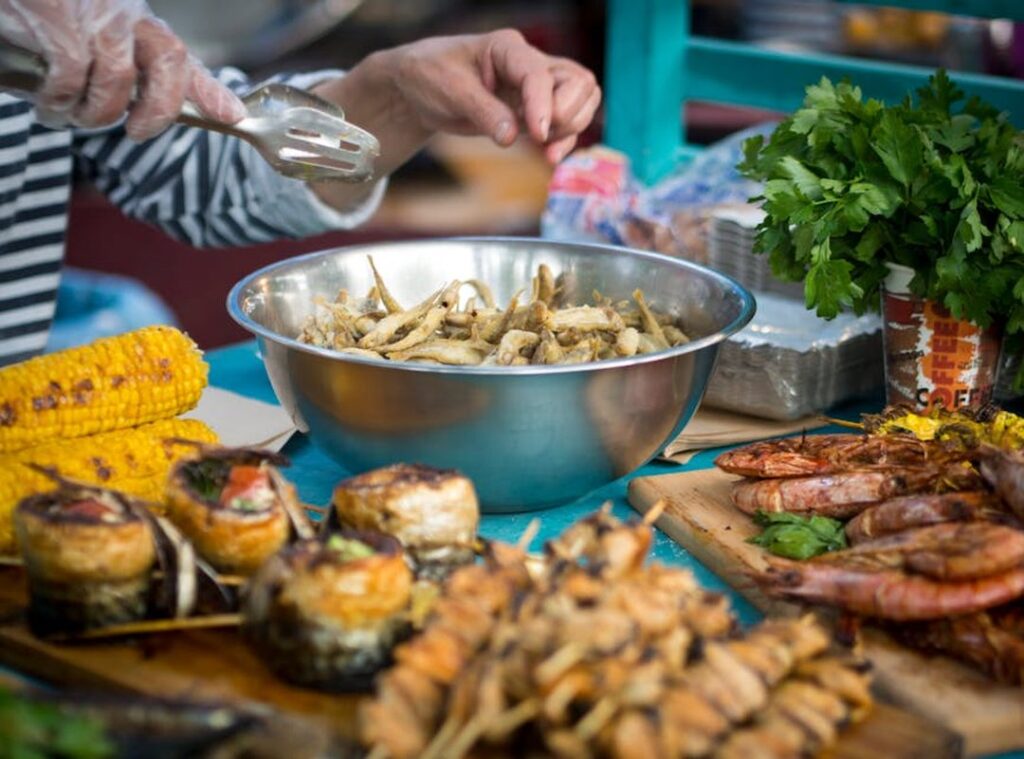
Street food is where the real magic happens. It’s not just about cheap eats (though that’s a plus). It’s about culture, history, and identity all wrapped up in a tortilla or skewered on a stick.
Ever tasted a taco on a bustling Mexican street or a steaming bowl of pho in Vietnam? That’s the real deal. The global street food influence is reshaping how we think about eating.
Does it make you wonder why your local fusion restaurant can’t replicate that flavor? It’s because street food is authentic. It’s crafted by people who know these flavors like the back of their hand.
They didn’t learn it in a culinary school; they learned it from their grandmother.
This article dives deep into those influences. We’ll explore how these lively flavors cross borders and why they matter. Trust me, you’ll look at your next meal with fresh eyes.
Get ready to taste the world from your own kitchen.
Street Food: The Unsung Hero of Local Economies
Street food isn’t just about grabbing a quick bite. It’s an economic powerhouse. Think about it.
For many marginalized communities and immigrants, setting up a food stall is a low-barrier entry point into business. They don’t need a Michelin star kitchen. Just a family recipe (like that secret taco sauce passed down for generations) and the desire to share something special.
Imagine a new immigrant. They arrive with nothing but their culinary traditions. They set up a stall, showcasing the flavors of their homeland.
It’s not just about selling food. It’s a cultural exchange. People flock to try authentic dishes, and suddenly, there’s a ripple effect.
Jobs are created, not just for the vendors but for local farmers and suppliers too. Money stays within the community. It’s the kind of grassroots impact you can’t ignore.
And then there’s tourism. Foodies love discovering authentic eats. Ever been to a city just to try their street tacos or dumplings?
Exactly. Street food becomes a primary driver for visitors. It’s not just about eating; it’s an experience.
People talk about those meals for years. The global street food influence can’t be underestimated. It’s not just local economies that benefit, but the entire tourism sector gets a boost.
Want to dive deeper into food’s economic impact? Check out this understanding sustainable seafood practices piece. There’s a reason street food is a key part of the culinary world.
It’s more than just meals on wheels. It’s an engine driving local communities forward.
A Melting Pot of Flavors: Street Food as a Cultural Ambassador
Street food is where you truly taste a culture. Forget those fancy restaurants with their overpriced plates. It’s the lively markets and bustling streets where the real magic happens.
When I think of street food, I see it as the most authentic expression of a region’s culinary soul. It’s raw, it’s real, and it’s accessible. You get to taste history in every bite.
Take Banh Mi in Vietnam. A simple sandwich, right? But it tells a story of French colonial history, blending baguette with Vietnamese flavors.
It’s a delicious symbol of cultural fusion.
Ceviche in Peru is another gem. Fresh fish, tangy lime, and a hint of chili. It’s a dish born from the coast, reflecting the country’s rich maritime resources.
These dishes aren’t just meals; they’re stories you can eat. And they manage to preserve culinary traditions that might be lost in the slick, polished world of formal dining.
You’ve heard of “gastrodiplomacy”? It sounds pretentious, but at the grassroots level, it’s solid. Sharing food on the street breaks down barriers.
You’re not just tasting a dish; you’re experiencing a culture, engaging in a shared human experience. It’s something formal dining just can’t replicate.
The global street food influence is undeniable. Street food brings people together, fostering understanding across cultures. You can taste the migration patterns, feel the history, and recognize the local ingredients.
It’s a celebration of diversity on a plate.
Pro tip: Next time you travel, skip the guidebooks. Head to the nearest street vendor. What you find there will tell you more about the local culture than any museum.
Street food doesn’t just fill your stomach; it feeds your soul.
In a world where connections often feel fleeting, street food grounds us in something real. It’s a delicious reminder of the world’s rich cultural mix.
From Street Stall to Michelin Star: A Flavor Revolution
Street food is where the magic happens. It’s not just about grabbing a quick bite (it’s) the unsung hero of culinary innovation. Ever notice how street vendors turn constraints into creativity?

In those tiny stalls, chefs become flavor wizards, focusing on what truly matters: taste, speed, and ingredient mastery.
High-end chefs know this. They’re not just wandering markets for a snack. They’re on a mission.
These culinary explorers scout street food stalls, sniffing out the next big thing. Why? Because street food is a real-time flavor laboratory.
It’s where new culinary ideas are born from necessity and creativity.
There’s an undeniable global street food influence that’s hard to ignore. Take Korean-Mexican tacos, for instance. This isn’t just fusion.
It’s a culinary revolution. Vendors blend traditions from their multicultural environments, creating dishes that are entirely new. It’s the pulse of modern cuisine.
But it’s not just about taste. It’s about storytelling. Every dish tells a tale of migration, adaptation, and survival.
Street food captures the essence of its surroundings, offering a snapshot of its cultural mix (there, I said it).
Pro tip? Next time you’re at a street market, pay attention. That dish you just devoured might soon grace the menu of a five-star restaurant.
And if you’re curious about how the internet changed cooking forever, there’s a fascinating read about this topic.
Constraints breed innovation. When you’ve only got a small cart, you can’t afford to be wasteful. You focus on what’s important.
Street vendors are masters of efficiency. , these limitations often lead to culinary breakthroughs. No wonder high-end chefs are taking notes.
In the end, street food is more than just food. It’s a movement, a revolution, a human ingenuity. Keep your eyes open.
The next time you eat from a street stall, you might be part of something much bigger.
Street Eats: Changing Global Food Trends
Street food isn’t just a quick bite. It’s a global street food influence that’s changed how we eat. Think about the food truck boom.
It’s not just about convenience. It’s about bold flavors, speed, and making food an experience. Ever tried a Korean taco or Thai curry on the go?
That’s street food’s mark.
Fast-casual restaurants? They’ve borrowed the street food ethos too. You want customization?
You got it. Whether it’s loading up a burrito or picking toppings for your bowl, it’s all about choice and speed. The street food vibe is everywhere.
And our palates? Way more adventurous now. Ingredients like gochujang (a spicy Korean paste), yuzu (a citrus fruit from Japan), and aji amarillo (a Peruvian chili) are in our kitchens.
Once exotic, now mainstream.
Social media has blown this up. Instagram and TikTok make street food go viral. A snap of a colorful dish and suddenly everyone’s craving it.
It’s not just food; it’s art. And it’s fast. Everyone’s sharing, tasting, influencing.
So, why does this matter? Street food shapes what we crave. It’s a culinary revolution, pushing flavors and experiences to the forefront.
Ever wonder where your next favorite dish might come from? Look to the streets.
Bite Into Culture
Street food isn’t just a meal. It’s a force. It drives global street food influence by empowering economies, preserving cultures, and sparking flavor innovation.
Dive into your local street food scene. Discover the world through taste. Become not just a consumer, but a student of culture.
Explore. Taste. Learn.

 Matthew Gordonidels has opinions about kitchen prep hacks. Informed ones, backed by real experience — but opinions nonetheless, and they doesn't try to disguise them as neutral observation. They thinks a lot of what gets written about Kitchen Prep Hacks, Hidden Gems, Culinary Pulse is either too cautious to be useful or too confident to be credible, and they's work tends to sit deliberately in the space between those two failure modes.
Reading Matthew's pieces, you get the sense of someone who has thought about this stuff seriously and arrived at actual conclusions — not just collected a range of perspectives and declined to pick one. That can be uncomfortable when they lands on something you disagree with. It's also why the writing is worth engaging with. Matthew isn't interested in telling people what they want to hear. They is interested in telling them what they actually thinks, with enough reasoning behind it that you can push back if you want to. That kind of intellectual honesty is rarer than it should be.
What Matthew is best at is the moment when a familiar topic reveals something unexpected — when the conventional wisdom turns out to be slightly off, or when a small shift in framing changes everything. They finds those moments consistently, which is why they's work tends to generate real discussion rather than just passive agreement.
Matthew Gordonidels has opinions about kitchen prep hacks. Informed ones, backed by real experience — but opinions nonetheless, and they doesn't try to disguise them as neutral observation. They thinks a lot of what gets written about Kitchen Prep Hacks, Hidden Gems, Culinary Pulse is either too cautious to be useful or too confident to be credible, and they's work tends to sit deliberately in the space between those two failure modes.
Reading Matthew's pieces, you get the sense of someone who has thought about this stuff seriously and arrived at actual conclusions — not just collected a range of perspectives and declined to pick one. That can be uncomfortable when they lands on something you disagree with. It's also why the writing is worth engaging with. Matthew isn't interested in telling people what they want to hear. They is interested in telling them what they actually thinks, with enough reasoning behind it that you can push back if you want to. That kind of intellectual honesty is rarer than it should be.
What Matthew is best at is the moment when a familiar topic reveals something unexpected — when the conventional wisdom turns out to be slightly off, or when a small shift in framing changes everything. They finds those moments consistently, which is why they's work tends to generate real discussion rather than just passive agreement.