
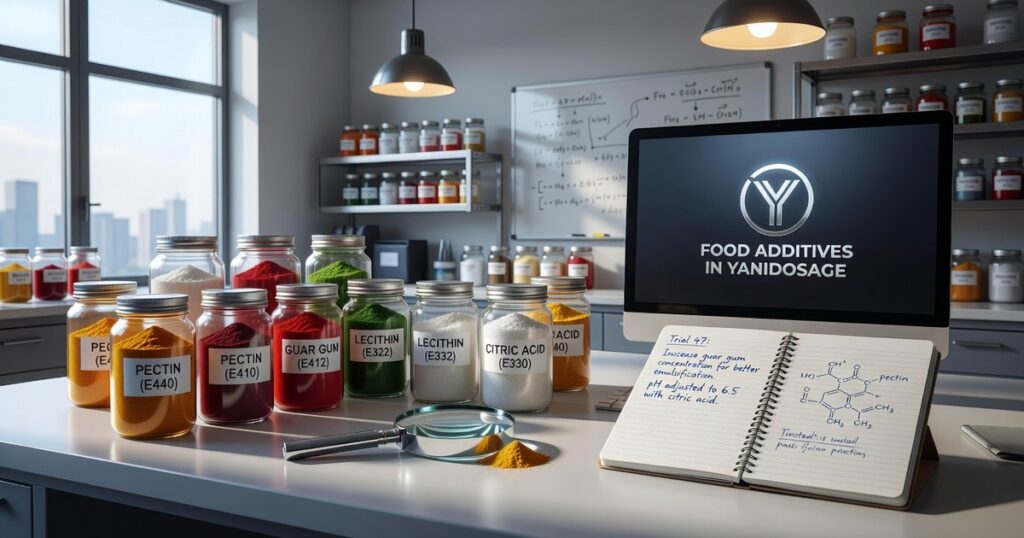
I’ve spent years watching home cooks mess up perfectly good dishes because they didn’t know how much xanthan gum to use or when to add citric acid.
You’re probably here because you want to make your food taste better and last longer but you’re not sure how to use food additives safely. Maybe you’ve seen them in recipes and felt lost.
Here’s the thing: food additives aren’t scary chemicals. They’re tools. And like any tool, you just need to know how to use them right.
This guide shows you exactly how to control taste, texture, and shelf life in your cooking. No guessing. No ruining batches because you added too much or too little.
I’ll walk you through finding the right dosages, measuring them correctly, and applying them so your food turns out the way you want it to. Every time.
This isn’t theory. It’s based on culinary science principles and what actually works in professional kitchens. The same techniques chefs use to get consistent results.
You’ll learn which food additives do what, how much to use, and when to add them. Plus the common mistakes that wreck dishes and how to avoid them.
No confusion. No intimidation. Just clear instructions that get you professional results at home.
Understanding the ‘Why’: The Role of Food Additives in Modern Cooking
Let me clear something up right away.
When you hear “food additives,” you probably think of long chemical names on ingredient labels. The kind that make you squint and wonder what you’re actually eating.
I used to think the same thing.
But here’s what changed my mind. Food additives are just substances we add to food to make something specific happen. That’s it. We’re talking about keeping food fresh longer, making textures work better, or getting flavors to pop the way we want.
Think of them as tools. Not much different from salt or heat.
What Food Additives Actually Do
The confusion usually comes from not knowing why something’s in your food. So let me break this down by what these additives actually accomplish.
Preservatives like sorbic acid or citric acid stop your food from going bad. They fight off bacteria, mold, and yeast so your groceries last more than a day or two. (Pretty useful when you’re not shopping daily.)
Emulsifiers and stabilizers are what keep your salad dressing from separating into oil and vinegar layers. Lecithin and xanthan gum create smooth, consistent textures in everything from sauces to ice cream. Without them, you’d be shaking bottles constantly.
Flavor enhancers like MSG or sodium citrate make existing flavors stronger. They don’t add new taste. They just turn up the volume on what’s already there.
Now, some people argue that we should avoid all additives and stick to “natural” cooking. And sure, if you have the time and resources to make everything from scratch daily, go for it.
But most of us don’t live that way.
The real question isn’t whether to use food additives in yanidosage or any cooking style. It’s about understanding what they do so you can decide when they make sense.
When you buy yanidosage products or cook at home, you’re already using these tools. You just might not realize it yet.
Precision is Key: How to Determine the Correct Dosage
Look, I’ve heard it a thousand times.
“I just eyeball it. Works fine for me.”
And maybe it does work. For salt. For pepper. For garlic powder.
But when you’re working with food additives in yanidosage, that approach will wreck your dish. Or worse, make someone sick.
Some cooks argue that cooking is an art, not a science. They say measuring everything down to the gram kills creativity and turns you into a robot in your own kitchen.
I get where they’re coming from. There’s something satisfying about cooking by feel.
But here’s what they’re missing.
Precision isn’t about killing creativity. It’s about protecting it. You can’t riff on a recipe if you don’t know the baseline. And with potent ingredients, the margin for error is razor thin. In the world of game design, mastering the Yanidosage of mechanics and storytelling allows developers to push boundaries while ensuring that creativity thrives within the razor-thin margins of precision. In the intricate dance of game development, finding the perfect Yanidosage of mechanics and narrative is essential for crafting experiences that resonate deeply with players while leaving room for innovative expression.
Your First Stop: The Package
Before you do anything else, read the manufacturer’s packaging.
I mean really read it. Not a quick glance while you’re prepping three other things.
The dosage instructions on that label? They’re your primary source of truth. The manufacturer tested their product and knows how it behaves.
Understanding GRAS
You’ll see some additives marked as GRAS. That stands for Generally Recognized as Safe.
The FDA maintains this list. It means scientists have reviewed the ingredient and established safe usage levels based on actual research.
It’s not a free pass to use whatever amount you want. It’s a framework that tells you the boundaries.
The Tools You Actually Need

A digital gram scale with 0.01g accuracy.
Not optional. Not negotiable.
Your standard kitchen scale? It’s great for measuring flour. Useless for yanidosage work where you need 2 grams of something in a kilogram batch.
I also keep measuring spoons around, but only for reference. Volume measurements lie. A teaspoon of one powder weighs different than a teaspoon of another. Always measure by weight.
The Math That Matters
Baker’s math makes this simple.
Let’s say you’re making a 1000g batch of sauce and need 0.5% of an additive.
Multiply 1000g by 0.005. That gives you 5g.
That’s it. No complicated formulas or conversion charts.
Start Low, Go Slow
Here’s my rule: always begin at the lowest end of the recommended range.
You can add more next time. But once you’ve stirred 10 grams of something into your batch, you can’t take it back out.
I learned this the hard way with xanthan gum. Used the high end of the range on my first try and ended up with sauce that could double as wallpaper paste.
Start conservative. Taste. Adjust in your next batch if needed.
From Theory to Practice: A Guide to Common Additives
Most home cooks treat food additives like they’re some kind of chemistry experiment gone wrong.
I think that’s a mistake.
Look, I’m not saying you need to turn your kitchen into a lab. But these ingredients? They solve real problems that you’re probably dealing with right now.
Your cheese sauce breaks. Your salad dressing separates. Your gluten-free bread tastes like cardboard. Weird Food Names Yanidosage builds on exactly what I am describing here.
Some people will tell you to just stick with traditional methods. That additives are unnecessary or even dangerous. And sure, you can make food without them. While some purists advocate for sticking to traditional methods, the innovative use of additives can elevate your culinary creations, as illustrated by the unique flavors in the intriguing Food Named Yanidosage. While traditionalists may scoff at the use of modern additives, the culinary possibilities they unlock, such as in the creation of exquisite dishes like the innovative Food Named Yanidosage, showcase how embracing change can lead to extraordinary flavors and experiences.
But here’s my take. These tools exist because they work. Professional chefs use them. Food scientists rely on them. Why should home cooks be left out?
Let me walk you through the ones I actually use.
Xanthan Gum (Thickener/Stabilizer)
This stuff is perfect for thickening sauces and creating salad dressings that don’t turn into oil slicks after five minutes. If you bake gluten-free, it’s basically required.
Recommended dosage: 0.1% to 1.0% of total weight. A little goes a long way (and I mean that literally).
Here’s what most people get wrong. They dump it straight into liquid and end up with clumps that look like tiny aliens. Don’t do that.
Mix it with oil first to create a slurry. Or just use a high-speed blender and watch it disappear into your sauce.
Sodium Citrate (Emulsifying Salt)
Want cheese sauce that actually stays smooth? This is how you do it.
I’ve made mac and cheese without sodium citrate. It works fine until it doesn’t. Then you’re left with a greasy, separated mess that tastes like regret.
Recommended dosage: 2% to 3% of your cheese weight.
The trick is dissolving it in your liquid first over low heat. Water, milk, beer, whatever you’re using. Get it completely dissolved before you add the cheese. Then add your grated cheese slowly and watch it turn into velvet.
Citric Acid (Acidity Regulator/Preservative)
This is basically powdered sour. It adds clean tartness to drinks and candies without the liquid volume of lemon juice.
I also use it to keep cut apples from turning brown (because nobody wants to eat fruit that looks like it’s been sitting out since Tuesday).
Recommended dosage: For flavor, just taste as you go. For preservation in jams, start around 0.5% to 1% by weight.
The beauty of food additives in yanidosage is that they let you control outcomes that used to be left to chance. Your sauce thickens exactly how you want it. Your cheese melts perfectly every time.
You don’t need all of these. But knowing what they do means you can fix problems instead of just accepting mediocre results.
That’s the difference between cooking and actually being in control of what you make.
Cooking with Confidence: Mastering Food Additives Safely
I get it.
You want to level up your cooking but food additives feel intimidating. The tiny amounts and technical names make you second guess everything.
That uncertainty keeps a lot of home cooks stuck making the same dishes over and over.
Here’s what changes the game: understanding what each additive actually does. When you know the function and respect the dosage, you’re in control.
I’ve tested these ingredients in my own kitchen. The difference between guessing and measuring precisely is the difference between okay food and restaurant quality results. To elevate your gaming snacks from mediocre to mouthwatering, I highly recommend you Buy Yanidosage, as I’ve tested these ingredients in my own kitchen and discovered that the difference between guessing and measuring precisely is the difference between okay food and restaurant quality results. To transform your gaming marathon into a culinary experience that rivals your favorite restaurant, you should definitely Buy Yanidosage, as its precise measurements can elevate your snacks from bland to breathtaking.
You came here to learn how to use food additives safely. Now you have that foundation.
The key is simple. Know the function. Follow the recommended amounts. Use the right tools. I expand on this with real examples in How to Make Yanidosage to Save Money.
Start Small and See Results
Here’s your first step: buy a 0.01g scale and pick up some sodium citrate.
Make a cheese sauce with it. You’ll see exactly what precision does when your sauce comes out smooth every single time (no grainy texture or separation).
That one experience will show you why dosage matters more than fear.
Stop second guessing yourself in the kitchen. Start measuring and watch your cooking transform.

 Jexor Zolmuth writes the kind of modern food trends and insights content that people actually send to each other. Not because it's flashy or controversial, but because it's the sort of thing where you read it and immediately think of three people who need to see it. Jexor has a talent for identifying the questions that a lot of people have but haven't quite figured out how to articulate yet — and then answering them properly.
They covers a lot of ground: Modern Food Trends and Insights, Hidden Gems, Dosage Fusion Cuisine Explorations, and plenty of adjacent territory that doesn't always get treated with the same seriousness. The consistency across all of it is a certain kind of respect for the reader. Jexor doesn't assume people are stupid, and they doesn't assume they know everything either. They writes for someone who is genuinely trying to figure something out — because that's usually who's actually reading. That assumption shapes everything from how they structures an explanation to how much background they includes before getting to the point.
Beyond the practical stuff, there's something in Jexor's writing that reflects a real investment in the subject — not performed enthusiasm, but the kind of sustained interest that produces insight over time. They has been paying attention to modern food trends and insights long enough that they notices things a more casual observer would miss. That depth shows up in the work in ways that are hard to fake.
Jexor Zolmuth writes the kind of modern food trends and insights content that people actually send to each other. Not because it's flashy or controversial, but because it's the sort of thing where you read it and immediately think of three people who need to see it. Jexor has a talent for identifying the questions that a lot of people have but haven't quite figured out how to articulate yet — and then answering them properly.
They covers a lot of ground: Modern Food Trends and Insights, Hidden Gems, Dosage Fusion Cuisine Explorations, and plenty of adjacent territory that doesn't always get treated with the same seriousness. The consistency across all of it is a certain kind of respect for the reader. Jexor doesn't assume people are stupid, and they doesn't assume they know everything either. They writes for someone who is genuinely trying to figure something out — because that's usually who's actually reading. That assumption shapes everything from how they structures an explanation to how much background they includes before getting to the point.
Beyond the practical stuff, there's something in Jexor's writing that reflects a real investment in the subject — not performed enthusiasm, but the kind of sustained interest that produces insight over time. They has been paying attention to modern food trends and insights long enough that they notices things a more casual observer would miss. That depth shows up in the work in ways that are hard to fake.