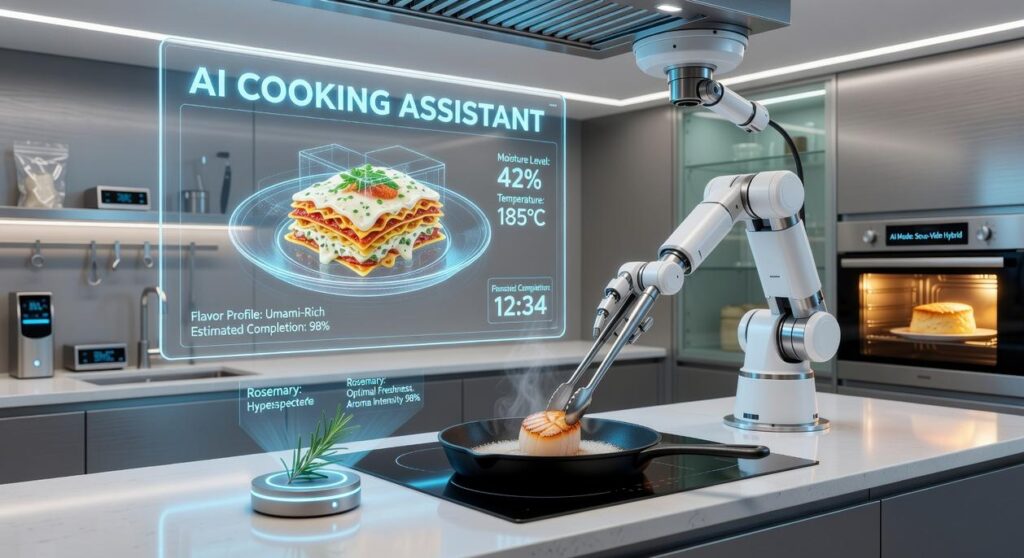
You’ve probably heard a lot about artificial intelligence lately—but have you ever tasted it?
If you’re here, you’re likely curious (maybe even skeptical) about how tech is sneaking into your kitchen. You’re not alone. Whether you’re a home cook stuck in a rut or a pro chef looking for that next flavor breakthrough, the search for something new never ends.
Here’s what’s happening: ai recipe development is no longer an experiment—it’s a full-on culinary revolution.
This article will show you how AI is being used not just to generate recipes, but to craft meals that are personalized, inventive, and genuinely delicious. We’ve spent years tracking how modern flavor concepts evolve—and this shift might be the most exciting one yet. You’ll see how AI is unlocking combinations most chefs haven’t even thought of, helping you cook smarter, tastier, and more creatively.
This isn’t about replacing chefs. It’s about reimagining what’s possible on your plate.
What is AI Recipe Creation? Beyond a Simple Search
Let’s clear something up: AI recipe creation isn’t your average Google search in a chef’s apron. It goes several steps beyond simply matching ingredients or pulling the top-rated risotto online.
This tech works like a digital super-taster—think someone who’s memorized every cookbook from Julia Child to Salt Fat Acid Heat, but can also analyze the chemical fingerprint of garlic. Using machine learning, it studies thousands of recipes, ingredient structures, and even flavor interactions at the molecular level.
Why does that matter for you?
Because it can generate brand-new recipes that actually make sense—no more guessing whether cumin pairs with blueberries (spoiler: probably not). AI identifies flavor patterns and predicts what combinations should work before you’ve wasted ingredients.
Pro tip: Trying to impress with a dinner nobody’s had before? Let ai recipe development suggest a spicy lemongrass cocoa glaze you didn’t know you needed.
Bottom line: this isn’t about cutting corners—it’s about elevating your meals with insight, not just instinct.
Unlocking Culinary Creativity: The AI Sous Chef
Let’s face it—creative ruts in the kitchen are real. Whether you’re a seasoned chef or an adventurous home cook, there’s always that moment where nothing feels new. But that’s where technology is starting to stir the pot (pun fully intended).
Breaking Flavor Barriers: One of the most powerful features of the AI Sous Chef lies in its ability to identify non-intuitive pairings based on molecular compound analysis. What does that mean in plain English? It means the AI goes beyond surface-level tastes and dives into what ingredients are really made of—matching compounds that complement each other, even when they seem wildly unrelated. Take strawberry and mushroom, for example. Both share key flavor molecules—ethyl maltol and 2,5-dimethylpyrazine—which produce surprising synergy. Another curveball pairing? Coffee and garlic. Sounds outrageous, right? But their shared roasted earthy notes can create layered depth in a rub for grilled meats.
Dosage Fusion Cuisine Perfected: Fusion food is risky business. Too often, it turns into a cultural mashup with no rhyme or reason. But AI can analyze recipe structures, preparation techniques, and flavor balances to suggest harmonious blends. Imagine Italian hand-rolled pasta with gochujang-infused ragu. It works—not just because it’s trendy, but because the AI maps out textures, acidity, and umami across cuisines. Pro tip: Keep a log of the most successful combinations and reverse-engineer variations later.
Overcoming Creative Blocks: Stuck on what to make with fennel? Input it into an ai recipe development tool, and you’ll get dozens of jumping-off points—from fennel sorbet with lime zest to braised fennel with tamarind glaze. It’s like having your own idea generator on standby, ready to shake up your process and unlock possibilities you’ve never considered.
In the end, AI isn’t replacing chefs—it’s helping them see the ingredients they already love in entirely new ways.
Hyper-Personalization: Recipes Tailored to You
Ever stared into your fridge and thought, “How do I turn this random mix into dinner?”
Yeah, us too.
That’s where ai recipe development steps in—because smart cooking isn’t just about taste anymore, it’s about you. Allergic to nuts? Skipping gluten? Trying out low-FODMAP for gut health? AI can snap its digital fingers and tailor any recipe to your limitations without sacrificing crunch, creaminess, or spice (that’s right, dairy-free doesn’t have to mean joy-free).
But the customization goes beyond allergies. Want a dinner with 40g of protein, less than 20g of carbs, and ingredients inspired by the Mediterranean coast? Done. (Pro tip: Tagliata di salmone with olive tapenade nails that brief.)
Still wondering what’s really revolutionary here?
Imagine entering five lonely ingredients from your pantry and getting a gourmet-level meal idea in seconds. Now you’re not just eating—you’re optimizing. Fewer wasted groceries, less guesswork, and no more sad desk lunches.
Want to see how this connects with broader food culture shifts? Just look at how gen z is influencing sustainable food choices.
Why should food settle for generic when you aren’t?
The Human Touch: Why the Chef Still Matters
Let’s get one thing clear: AI didn’t just walk into the kitchen and hang up the chef’s coat. It’s here to assist, not replace.
Here’s the reality. AI can generate thousands of recipe variations in minutes. It can suggest a Thai basil-lime twist on your usual chicken stir-fry or build an entire week of meals based on your macros and fridge contents. But when it comes to the feel of food—texture, balance, finesse—that still belongs to the human hand. An algorithm can suggest, but only a chef can taste.
Take ai recipe development for instance. It’s brilliant for data crunching: predicting flavor affinities, analyzing spice combinations, even identifying gaps in consumer trends. IBM’s “Chef Watson” once generated over 10,000 hybrid recipes—including a Vietnamese Apple Kebab (yes, really). But those wild experiments needed skilled chefs to translate into something edible.
And then there’s plating. AI can guide portion size or color contrast, but it can’t adjust viscosity on the spot when your reduction goes sideways (we’ve all been there).
Pro tip: Trust the tool, but train the hand. AI can suggest a journey, but it takes a chef to actually cook the map.
Because food isn’t just chemistry—it’s art, improvisation, and, sometimes, happy accidents.
The Future of Flavor is a Human-AI Collaboration
You came here to understand how technology is reshaping the culinary world—and now it’s clear: AI isn’t replacing creativity, it’s expanding it.
We all hit that wall in the kitchen—running out of ideas, relying on the same go-to flavors, limited by what we’ve tasted before. That’s where ai recipe development changes everything.
By processing vast flavor databases and human preferences, AI introduces combinations we’d never think of on our own. The result? More dynamic dishes, more personalized experiences, and more breakthroughs at the dinner table.
You’ve seen how it works. Now it’s time to try it.
Elevate your next meal: use an ai recipe development tool today and experience just how far your cooking can go. Thousands are discovering new flavor sparks every day—don’t get left behind.

 Jexor Zolmuth is the co-founder and creative force behind the platform, focused on building a community around food inspiration and cooking knowledge. He contributes expert articles on modern cooking trends, kitchen innovations, and meal creativity, aiming to inspire readers to explore flavors, improve their techniques, and enjoy the art of cooking.