
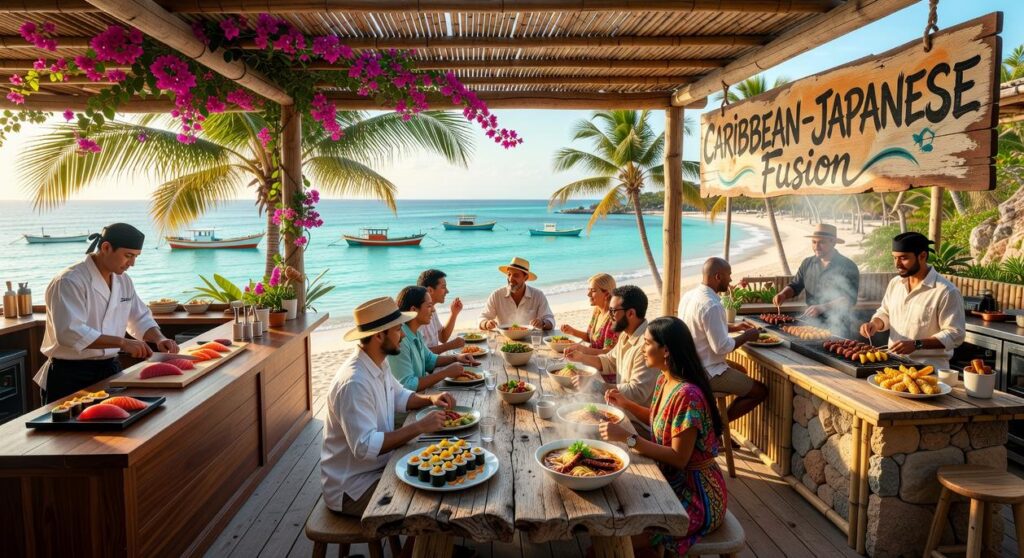
You’ve probably heard buzz about a new kind of fusion cooking—but caribbean-japanese fusion? That’s the one making chefs rethink everything they know about balance, depth, and contrast.
At first glance, it sounds improbable. Tropical heat meets umami precision? But what we’re seeing is more than just a trend—it’s an evolution. The smoky, sweet intensity of Caribbean flavors isn’t clashing with Japanese restraint; it’s leveling it up.
We’ve been tracking flavor concepts at the crossroads of tradition and innovation, and this one’s exploding in elite kitchens and street food stalls alike. The harmony isn’t forced—it’s smart, and more importantly, it’s delicious.
In this article, you’ll get a clear breakdown of what makes caribbean-japanese fusion work. We’ll dig into the flavor pairings, the techniques that bring them alive, and the signature dishes turning skeptics into believers. This is where fire meets finesse. Let’s get into it.
The Flavor Bridge: Deconstructing the Taste Profiles
Most write-ups on fusion cooking focus on flashy pairings or Instagrammable platings. But the real advantage? Understanding what’s happening under the hood—how flavors build, balance, and transform.
Let’s start with the Caribbean core: a rhythm of warming spices like allspice, fiery scotch bonnet, and earthy thyme, layered with creamy coconut, the tart lift of lime, and sun-drenched fruits like mango and pineapple. These aren’t just ingredients—they’re traditions of marinating, of building flavor depth over time (think slow-cooked oxtail, not a 20-minute stir-fry).
Now shift to Japan: a deliberate calibration of the five tastes, especially umami—the savory punch found in soy sauce, miso, and dashi. Citrus like yuzu brings sharp clarity, while rice vinegar, ginger, and wasabi keep the palate alert.
So how do these connect? caribbean-japanese fusion isn’t about contradiction—it’s about complement. Yuzu’s brightness pierces through rich coconut sauces (a tiny spoonful goes a long way), while miso lends smoky jerk marinades a deeper, funkier base. Salt and sour meet heat and sweet—it’s jazz, not a recipe.
Pro tip: Roast your scotch bonnet before blending—it tempers the heat and adds a rounder flavor that plays beautifully with wasabi’s sharpness.
It’s not hype. It’s harmony.
Technique Meets Tradition: How the Magic Happens
Let’s be honest—fusion cuisine often gets a bad rap. Sometimes deservedly so. You’ve seen the over-hyped “sushi tacos” and curry pizza monstrosities (we’ve all been hurt before). But when done right, blending culinary traditions is less about gimmicks and more about respecting technique and unleashing flavor.
Take Japanese methods and Caribbean ingredients—on the surface, they couldn’t be more different. One prizes precision and restraint; the other bursts with heat and soul. But they can absolutely dance in sync.
Tempura & Agemono
Frying breadfruit or plantain in a feather-light tempura batter instead of the usual heavy dredge? Game-changer. You get this golden crisp without the oil-slick mouthfeel. I tried this at a pop-up in Kingston—and it floored me. It’s still Caribbean, just more delicate. (Your grandma’s going to want the recipe.)
Grilling & Glazing
A robata grill—traditionally used in Japan for smoky, slow-fired skewers—is an unlikely MVP for jerk chicken. Swap out the sugar-heavy glaze with a miso-infused jerk sauce that caramelizes as it kisses the flames. Every baste adds depth, pulling umami and island spice into perfect harmony.
Curing & Pickling
Enter the “Caribbean Sunomono”—a quick-pickle of cucumber and mango in rice vinegar, with just a whisper of scotch bonnet. It refreshes and stings at once (like the beach after a sunburn).
My verdict? When executed thoughtfully, caribbean-japanese fusion doesn’t dilute either tradition. It elevates both.
Pro tip: If you’re experimenting at home, invest in good rice vinegar. It’s the unsung hero in balancing these bold flavors.
For more bold culinary hybrids, check out the indian med fusion dishes that are redefining fine dining.
On the Menu: Signature Caribbean-Japanese Dishes

Ready to try something that’ll wake up your palate and make you rethink fusion food? Good—because Caribbean-Japanese fusion isn’t just a trend; it’s becoming a whole vibe (yes, your weekend dinner plans just got an upgrade).
Here’s what you should absolutely order first, whether you’re a sushi loyalist or a ramen devotee:
-
The ‘Rasta’ Roll
Think sushi rolled in sunshine. Jerk-spiced shrimp tempura meets creamy avocado and sweet mango, all topped with toasted coconut and a fiery scotch bonnet aioli. It’s bold and sweet with just enough heat to keep things interesting. (And, no, this isn’t your average spicy tuna roll.) -
Ackee & Saltfish Gyoza
Jamaica’s national breakfast just crashed into a Japanese izakaya. These pan-fried dumplings offer a savory, umami-rich bite with familiar Caribbean flair. Dip them into the soy-ginger sauce and prepare to question why this combo isn’t already mainstream. -
Coconut Miso Ramen
This is comfort in a bowl. A broth built on coconut milk and white miso sets the stage, but it’s the braised oxtail, callaloo, and soy-cured egg that steal the show. It’s not just fusion—it’s full-on flavor diplomacy. -
Yuzu Escovitch
This spin on escovitch fish dials back the vinegar and steps it up with citrusy yuzu and tangy ponzu. Lightly fried snapper holds it down for tradition, but the zingy twist makes it refreshingly modern.
Pro Tip: Start with the gyoza to open your taste buds, then follow up with the ramen—it’s a journey worth taking.
Kitchen Hacks: Bringing Dosage Fusion Cuisine Home
When it comes to whipping up the perfect marinade, you’ve got options: the all-too-familiar teriyaki-glaze-on-repeat — or something bolder, like a Jerk-Ponzu hybrid that walks the tightrope between smoky heat and citrusy umami. Teriyaki’s comforting (like your favorite hoodie), but the Jerk-Ponzu has range. It sings on grilled tofu, dances on fish, and gives chicken that whoa, what is that? appeal.
Now, consider infusing flavor. You could toss in dried herbs and hope for the best, or steep toasted allspice berries and thyme in soy sauce for a week. One gives you hints; the other delivers depth. (Patience tastes better.)
And plating? Compare generic pile-it-up style with Japanese minimalism. Using ma — intentional space — your caribbean-japanese fusion dish becomes art. Less clutter, more wow. (Bonus: it makes even leftovers look gourmet.)
You came here curious—wondering if caribbean-japanese fusion was more than just a trendy mashup.
Now you know it’s a flavorful evolution that makes perfect sense.
We’ve broken down how the deep heat and spice of the Caribbean balances beautifully with the subtle, umami-driven elegance of Japanese cooking. No more guesswork, no more wondering if these flavors belong together—they absolutely do.
You’ve got the knowledge. Now it’s time to apply it.
Boldness is the key ingredient. Start today with our signature ‘Jerk-Ponzu’ marinade and unlock a whole new world of caribbean-japanese fusion creations in your own kitchen.
As we delve into the vibrant world of Caribbean-Japanese fusion and its bold umami flavors, it’s essential to consider how these culinary innovations can align with healthier eating habits, which you can further explore in our article on Nutrition Hacks Fhthgoodfood.

 Matthew Gordonidels has opinions about kitchen prep hacks. Informed ones, backed by real experience — but opinions nonetheless, and they doesn't try to disguise them as neutral observation. They thinks a lot of what gets written about Kitchen Prep Hacks, Hidden Gems, Culinary Pulse is either too cautious to be useful or too confident to be credible, and they's work tends to sit deliberately in the space between those two failure modes.
Reading Matthew's pieces, you get the sense of someone who has thought about this stuff seriously and arrived at actual conclusions — not just collected a range of perspectives and declined to pick one. That can be uncomfortable when they lands on something you disagree with. It's also why the writing is worth engaging with. Matthew isn't interested in telling people what they want to hear. They is interested in telling them what they actually thinks, with enough reasoning behind it that you can push back if you want to. That kind of intellectual honesty is rarer than it should be.
What Matthew is best at is the moment when a familiar topic reveals something unexpected — when the conventional wisdom turns out to be slightly off, or when a small shift in framing changes everything. They finds those moments consistently, which is why they's work tends to generate real discussion rather than just passive agreement.
Matthew Gordonidels has opinions about kitchen prep hacks. Informed ones, backed by real experience — but opinions nonetheless, and they doesn't try to disguise them as neutral observation. They thinks a lot of what gets written about Kitchen Prep Hacks, Hidden Gems, Culinary Pulse is either too cautious to be useful or too confident to be credible, and they's work tends to sit deliberately in the space between those two failure modes.
Reading Matthew's pieces, you get the sense of someone who has thought about this stuff seriously and arrived at actual conclusions — not just collected a range of perspectives and declined to pick one. That can be uncomfortable when they lands on something you disagree with. It's also why the writing is worth engaging with. Matthew isn't interested in telling people what they want to hear. They is interested in telling them what they actually thinks, with enough reasoning behind it that you can push back if you want to. That kind of intellectual honesty is rarer than it should be.
What Matthew is best at is the moment when a familiar topic reveals something unexpected — when the conventional wisdom turns out to be slightly off, or when a small shift in framing changes everything. They finds those moments consistently, which is why they's work tends to generate real discussion rather than just passive agreement.